- Startup Spells 🪄
- Posts
- Niche vs. General YouTube Channels: Thomas Frank's 290K+ vs. 2M+ Subscribers (Case Study)
Niche vs. General YouTube Channels: Thomas Frank's 290K+ vs. 2M+ Subscribers (Case Study)
PLUS: Viral Loops & memes

Startup Spells 🪄
December 26, 2025
Thomas Frank had 3 million subscribers. A decade of work. Then he walked away to make software tutorials from scratch. Most creators thought he was crazy.

Thomas Frank's original productivity channel
2 years later, Thomas Frank Explains sits at 290,000 subscribers. It generates millions of views teaching people how to use Notion.
But more importantly, it became exactly what Frank wanted: the go-to destination for learning about Notion.
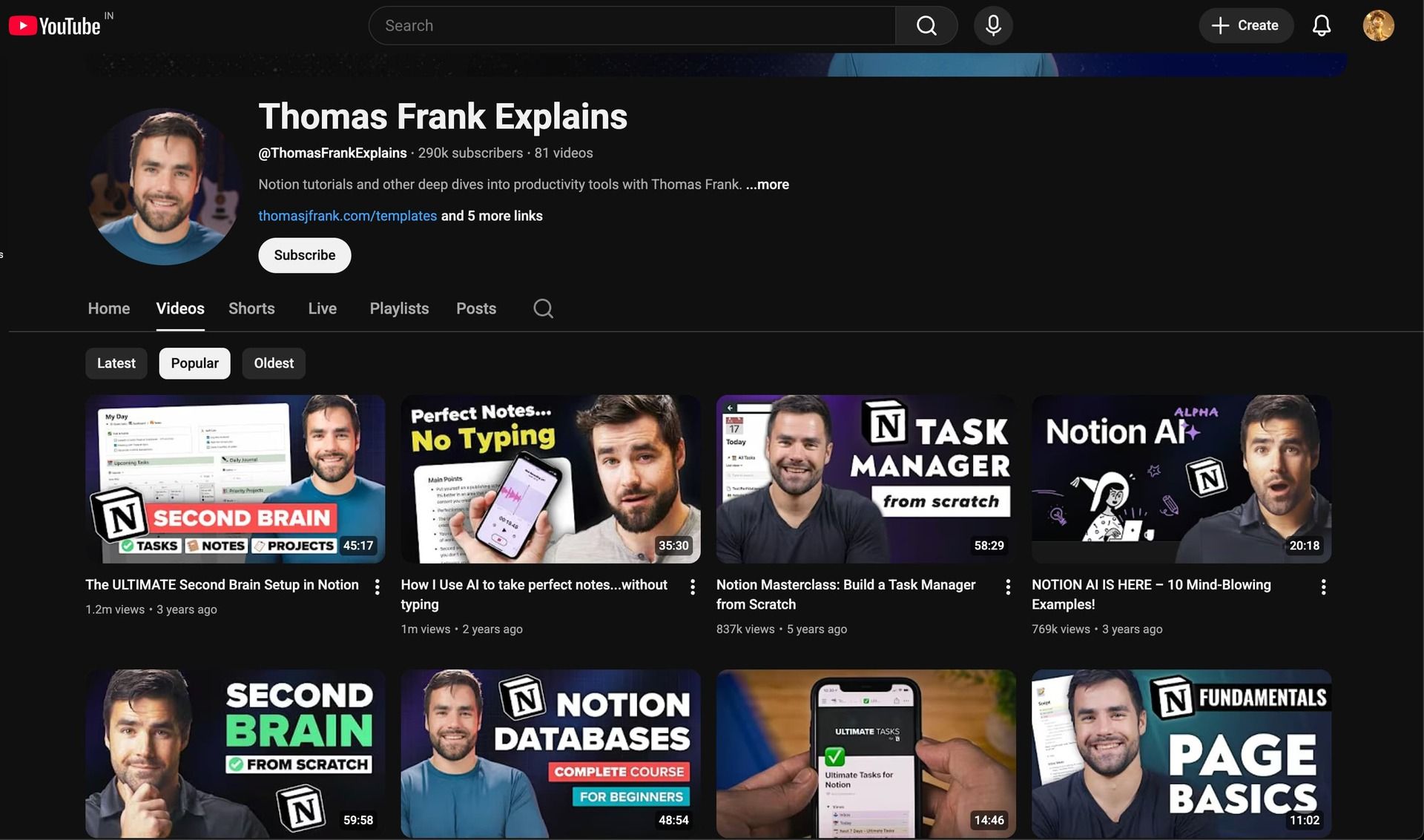
Thomas Frank's new Notion focused channel
The split wasn't about gaming the new interest-graph algorithm. It was about solving positioning dilution.
The algorithm ignores variety, but viewers punish it
YouTube's algorithm treats mixed content fine. It pushes individual videos to people who want to see them. The rest sit there, accumulating modest views from search traffic.
Frank knew this. But he wasn't optimizing for the algorithm. He was optimizing for cognitive fluency.
When someone clicks from a viral video to your YouTube channel page, they scan your recent uploads. They ask one question: "Is this channel for me?"
If they see 3 productivity vlogs, 2 personal finance guides, and 1 Notion tutorial, they get confused. The positioning is unclear.
The brain has to work harder to categorize the creator. This is the paradox of choice in action—when the value proposition is cluttered, users choose "none."
Frank realized that first impressions happen at the channel level.
Destination vs. Feed Branding
Frank shifted his strategy from building a "Feed Brand" (content you stumble upon) to a "Destination Brand" (content you search for).
On his main channel, he was a Productivity Generalist. He competed with every other lifestyle vlogger for attention in the browse feed. On his new channel, he became the Notion Authority.
This distinction matters because of authority bias.
When a user lands on the new channel and sees 50 videos exclusively about Notion, arranged in clear playlists from beginner to advanced, their brain takes a psychological shortcut: "This is the definitive expert."
A massive library of hyper-specific content signals instant expertise.
Asset Class Diversification: Building a Library of Assets
Frank shifted his business model from a "content treadmill" to "asset accumulation."
His main channel relied on ephemeral hits. Motivation videos and vlogs age quickly. They require constant fresh uploads to maintain relevance.
His new channel focuses on evergreen assets.
A video titled "How to build a Second Brain in Notion" is a long-term asset. It stays relevant for years. It accumulates views from search traffic long after publication.
By splitting the channel, Frank treated his YouTube library as a searchable database of solutions. He moved from the media business (entertaining viewers) to the software education business (solving problems).
Intent Matching: Resolving the "Lean Back" vs. "Lean Forward" Conflict
Frank identified 2 distinct customer segments with conflicting goals. This is classic audience segmentation:
The Main Channel Audience: Passive consumers seeking inspiration. They want to feel motivated. They are in a "lean back" emotional state.
The Explains Audience: Active learners seeking instruction. They want to build a specific database. They are in a "lean forward" cognitive state.
Mixing these intents causes mental friction.
A video titled "Here's how to change your URL Handler for a Notion link" makes zero sense on a general productivity channel. Nobody searching for morning routine tips wants to see hyper-technical Notion tutorials about API integrations.
But on Thomas Frank Explains? It fits perfectly.
Frank resolved the conflict through intent matching. He stopped trying to serve everyone and started serving specific needs deeply.
The Psychology of the "Subscription Contract"
Viewers subscribe when they have a clear expectation of future value. This is the subscription contract.
On a variety channel, that contract is vague: "I'll upload stuff about life and work."
On the new channel, the contract is ironclad: "I will teach you Notion."
Breaking the contract by uploading unrelated content creates friction. Hyper-focus reinforces it. This creates cognitive ease—the viewer knows exactly what they are getting, making the decision to subscribe frictionless.
The results of this vertical integration strategy are visible in the search rankings. By owning the destination for the tool, Frank captures the entire value chain—from free discovery to advanced implementation.
If you search for "Notion database," Frank owns the top spot.
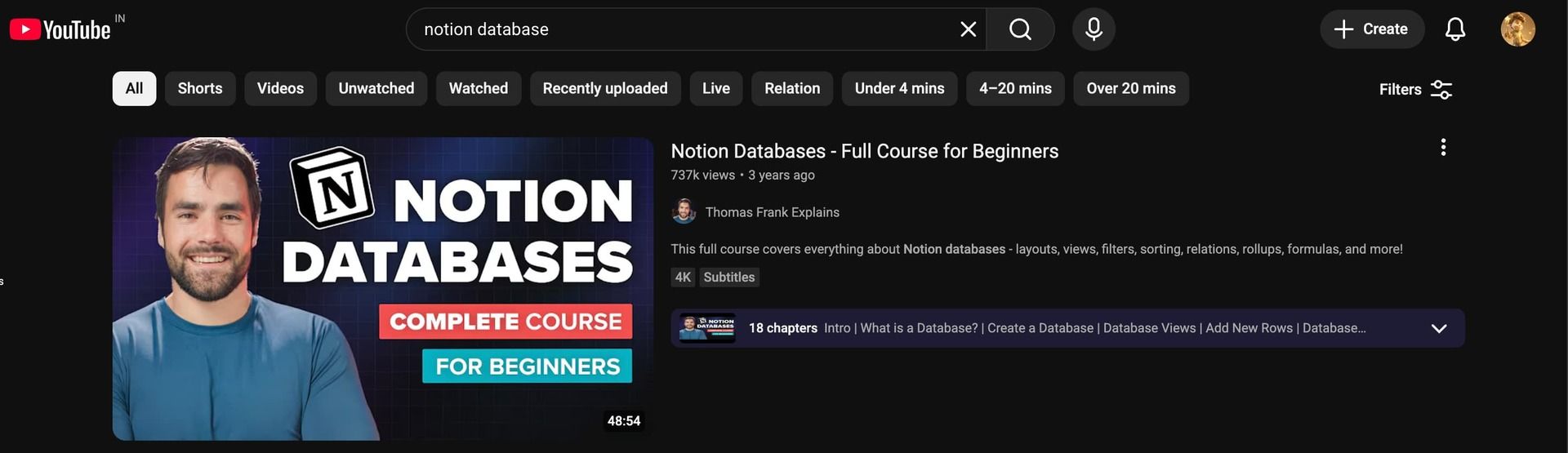
YouTube search results for Notion Database
If you search for "Notion blocks," he is right there next to the official Notion channel at #2.
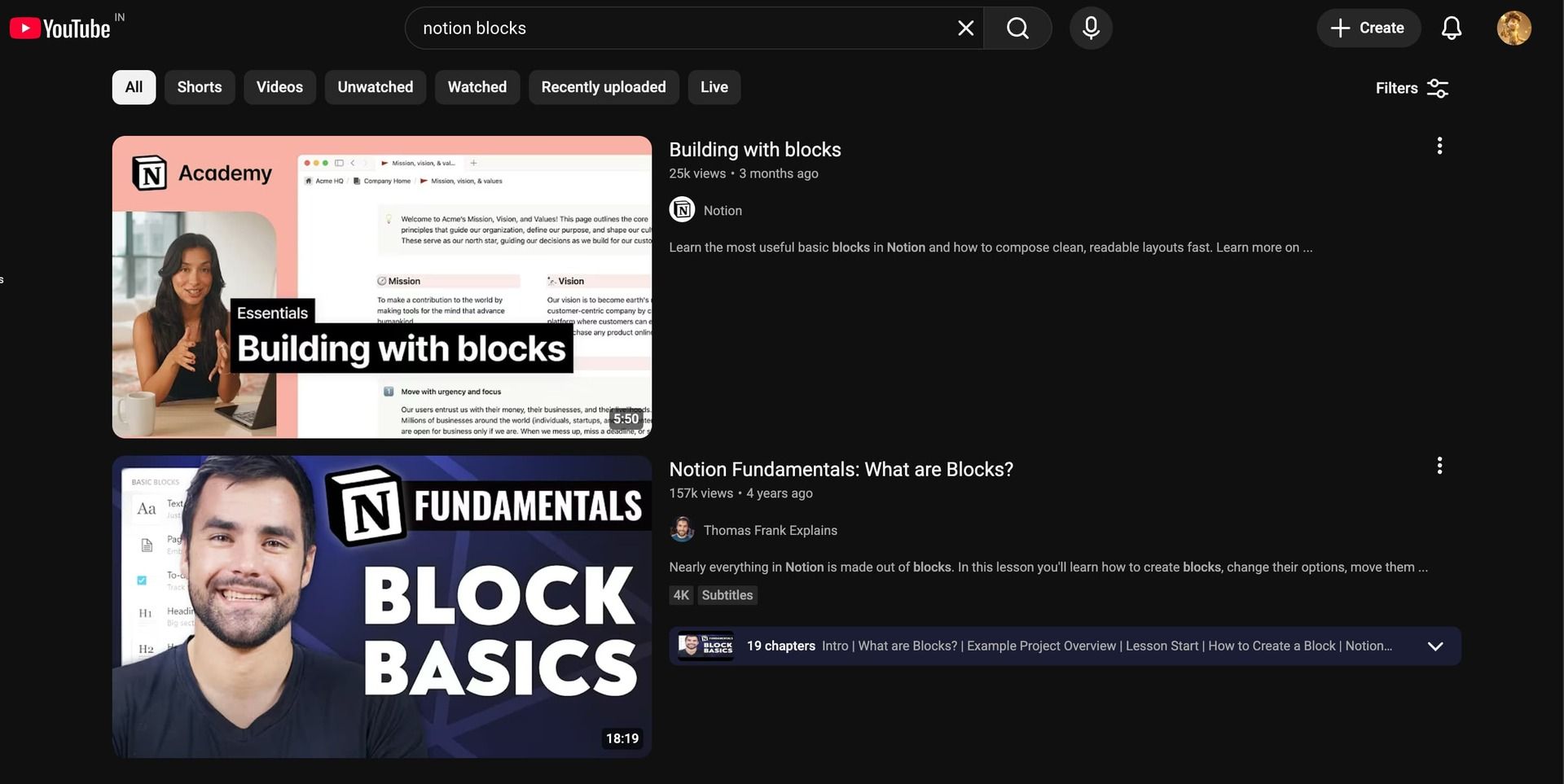
YouTube search results for Notion Blocks
If you search for "Notion habit tracker," he dominates the results again with #1.

YouTube search results for Notion Habit Tracker
He isn't just a YouTuber making Notion videos. He is the destination.
When splitting makes sense
Not every creator should split their channel. Frank's decision worked because he had 2 fundamentally different content types that could not coexist without confusing the audience.
The Main Channel was for entertainment. Viewers watched for ideas, not instruction manuals.
The Explains Channel was for utility. Viewers wanted step-by-step tutorials they could replicate.
Splitting makes sense when the audience intent and discovery patterns are opposed. It allows you to build a high-intent audience—subscribers who are looking to solve a problem and are likely to buy templates, courses, or consulting.
Business-wise, 220,000 high-intent subscribers looking for software solutions are often more valuable than 2 million generalists looking for entertainment.
Frank abandoned the vanity metrics of the main channel to build a high-leverage asset. He traded width for depth.
Source: Thomas Frank on Creator Science
Top Tweets of the day
1/
If you are a marketer, you should learn how to code a bit, at least a little bit.
You can easily 10x your output. Plus it's easier now since all you have to use is natural language only.
Don't let fear of code stop you from trying it. It's actually easy now.
I learned English Grammar the other day. Now I know how to form sentences but I never really got what adverb, adjective, verb, etc... meant. I only understood noun. So I asked DeepSeek to ELI5 (link to actual chat) and give me 80/20 of it and got it within 5 minutes. I even asked it to give me a 5-question quiz. I've avoided this topic my entire life lmao.
The new framework is if millions of people have done it, then I can too.
Lately, I've been using Claude "Learning" Style to tackle complex topics that are poorly explained and it asks pro-active questions like no other LLM does. Try a hard topic you've avoided all your life today & ask Claude's "Learning" Style to explain it to you and you'll be amazed at how much easier it is to learn. Once you get that "aha" moment here, your learning ability and confidence to tackle hard problems will skyrocket.
2/
Smart! Lots of animated mockup tools like this exist out there like Rotato.
3/
This is the surveillance capitalism version of competitive analysis lol.
Monitor their entire digital footprint from blog to footer to nav bar to socials & the moment they ship something successful, you either rip it off immediately or counter it.
Every UGC creator worth their salt does this. They're not innovating, they're speed-running outlier videos.
Rabbit Holes
What’d ya think of today’s newsletter? Hit ‘reply’ and let me know.
Do me a favor and share it in your company's Slack #marketing channel.
First time? Subscribe.
Follow me on X.
More Startup Spells 🪄
Claude's Gift Strategy: Beat December SaaS Slump with Holiday Campaign (LINK)
The YouTube Mafia: How 4 Channels Built a YouTube Monopoly in India (LINK)
Increase Dwell Time Using Black Hat SEO Tactics (LINK)
How HubSpot's Website Grader (and AEO Grader) Won at SEO (LINK)
TikTok Trendjacking: How to Get Millions of Views Using the Holic Trend (LINK)
Reply