- Startup Spells 🪄
- Posts
- How YadaPhone Captures Voice of Customer Data using Automated Feedback Forms
How YadaPhone Captures Voice of Customer Data using Automated Feedback Forms
PLUS: Opus 4.5 With Claude Skills

Startup Spells 🪄
December 22, 2025
YadaPhone built a feedback engine that prints money. It also prints marketing copy on autopilot. In 2 months, this system generated 150+ detailed user stories without a single interview.

YadaPhone browser-based international calling interface
The mechanism is simple: a 2-question form triggers after the 2nd payment. The reward is a 15% discount that expires in 7 days.
Most founders spam new signups with surveys. YadaPhone waits until the user has proven their value. The result is high-quality qualitative data like this:
"I am a U.S. citizen visiting France and my American SIM card does not work in France. Yadaphone helped me to call within France phone numbers that I cannot reach on Whatsapp... Yadaphone allowed me to avoid having to buy a French SIM card."
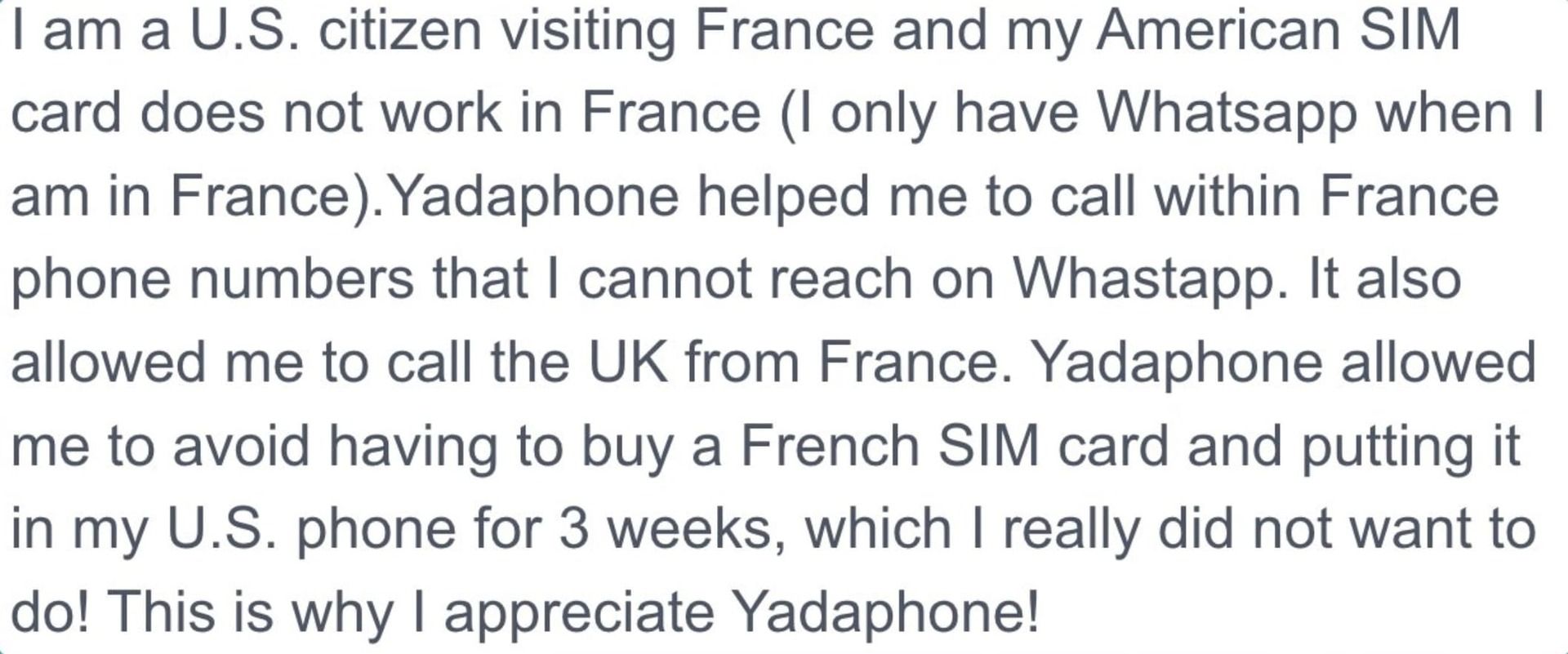
YadaPhone user feedback about calling in France
Here's how Denis Yurchak, the founder, designed the machine.
Why 2nd payment timing filters better customers
People justify their behavior through consistency.
When someone pays twice, they've mentally categorized themselves as a "user of this product." Psychologists call this the Consistency Principle. Once you commit to a decision, your brain seeks evidence you made the right choice.
Denis exploits this by triggering the form only after the 2nd payment.
At this moment, the user feels internal pressure to explain why they came back. Writing down their reasons doesn't just help Denis. It reinforces their own loyalty. This timing also filters tire-kickers. Someone who paid twice has integrated the product into their life. They have stories to tell.
The Skype shutdown that changed everything
When Skype shut down its calling service, Denis saw an opportunity.
He assumed displaced users wanted the cheapest alternative. The landing page screamed "affordable international calls." The marketing focused on cost per minute.
Then the feedback started rolling in.
The France testimonial hit his inbox first. The user didn't mention price once. They talked about avoiding the hassle of buying a local SIM card. Convenience over savings.
Denis went through the other stories. Same pattern. Users weren't switching because YadaPhone was cheaper. They switched because it worked internationally while Google Voice struggled with local numbers.
His entire positioning was backwards.
This is why Voice of Customer data matters. Users understand your value proposition better than you do. Denis originally thought his killer feature was "cheap calls." The feedback revealed the actual moat: hassle-free international calling that works everywhere.
He didn't discover this in a brainstorming session. A customer told him.
The "Zero-Friction" feedback loop
Denis optimized for text, not data.
He removed all demographic questions. No name fields. No age ranges. No "How did you hear about us?" dropdowns. Just 2 questions:
"Give me 2-3 examples of how Yadaphone helped you"
"Would you recommend Yadaphone to a friend, and why?"
The first extracts tactical examples. Specific moments when the product saved the day. The second extracts emotional reasoning. Together, they create complete customer narratives.
Because friction is near zero, users actually complete it.
Denis now has 150+ stories revealing specific use cases to target: international travelers, expats, business calls to foreign clients. He sees exact customer language. Users say "avoid buying SIM cards" instead of "cheap calls." Instead of guessing what resonates, he copy-pastes real language into landing pages.
For a bootstrapped founder, 150 detailed stories in 2 months is exceptional research. Most startups pay thousands for this. Denis automated it.
The 7-day discount psychology
The 15% discount drives responses. The deadline drives revenue.
Denis positions the discount as a "thank you," not a sales hook. This taps into Reciprocity. The user just spent 3 minutes writing about how much they love the product. Their brain is primed. The discount converts that goodwill into a 3rd payment.
The 7-day window triggers Loss Aversion. Users think: "I have this reward. If I don't use it now, I lose money." Seven days gives enough time to plan their next call but not enough to forget.

YadaPhone 15% discount email with time limit
This isn't just feedback collection. It's a retention loop. Users articulate why they love YadaPhone, receive validation through the discount, then prove loyalty with another purchase. Each step reinforces the next.
YadaPhone's full retention architecture
This feedback loop is one of three automated systems Denis built in a single weekend. Different customer segments need different urgency levels. So he designed 3 distinct flows:
The 2-hour panic window for cart abandoners. High-intent users on the edge of buying. A 2-hour expiry forces an immediate decision. Capture this value before it vanishes.
The 24-hour reflection window for test callers. Medium-intent users who validated the tech but haven't paid. One day gives time to think without letting procrastination set in.
The 7-day convenience window for happy customers. Paying users who just gave feedback. Already demonstrated loyalty. The longer window gives time to plan their next call while maintaining urgency through appreciation.
Each window matches the user's psychological state. Denis tested different deadlines and watched conversion rates. Three segments, three systems, three outcomes. All running on autopilot.
If you wait for testimonials, you'll wait forever
Denis hasn't publicly shared completion rates or revenue impact. But the results speak through 150 stories.
Each story is a data point. Each data point reveals a customer segment. Each segment becomes a campaign. The feedback form didn't just collect testimonials. It became a product discovery engine that reshaped his entire positioning.
Most founders wait for customers to voluntarily write testimonials. That's why most founders have zero. Denis automated the ask at the exact moment users felt compelled to share. He removed friction. He added reciprocity.
The system runs itself. Stories flow in. Marketing copy writes itself. Customer segments reveal themselves.
Ask right after they hit the aha moment in your product. Make it dead simple. Give them a reason to respond.
The stories will follow.
Top Tweets of the day
1/
Use AI to write content by giving it your original insights, but also use AI to edit it and verify it so that this never happens.
2/
Extremely true. Work out, run, or even do jumping jacks before trying to fix your brain. It is an unusual source of good ideas.
3/
X.com algorithm changed again. Monthly reminder to always exploit algorithmic hacks whenever they are available because they go out of fashion fast.
Rabbit Holes
What’d ya think of today’s newsletter? Hit ‘reply’ and let me know.
Do me a favor and share it in your company's Slack #marketing channel.
First time? Subscribe.
Follow me on X.
More Startup Spells 🪄
Duolingo's Screenshot Tracking Strategy: How To Go Viral via Social Sharing (LINK)
The YouTube Mafia: How 4 Channels Built a YouTube Monopoly in India (LINK)
Increase Dwell Time Using Black Hat SEO Tactics (LINK)
How HubSpot's Website Grader (and AEO Grader) Won at SEO (LINK)
TikTok Trendjacking: How to Get Millions of Views Using the Holic Trend (LINK)
Reply