- Startup Spells 🪄
- Posts
- How Gamifying Failure Increased Chess.com Subscriptions by 20%
How Gamifying Failure Increased Chess.com Subscriptions by 20%
PLUS: How Rockefeller Worked

Startup Spells 🪄
January 27, 2026
Albert Cheng's team built the Chess.com's Game Review feature on a logical assumption. They believed chess players wanted to fix their mistakes.
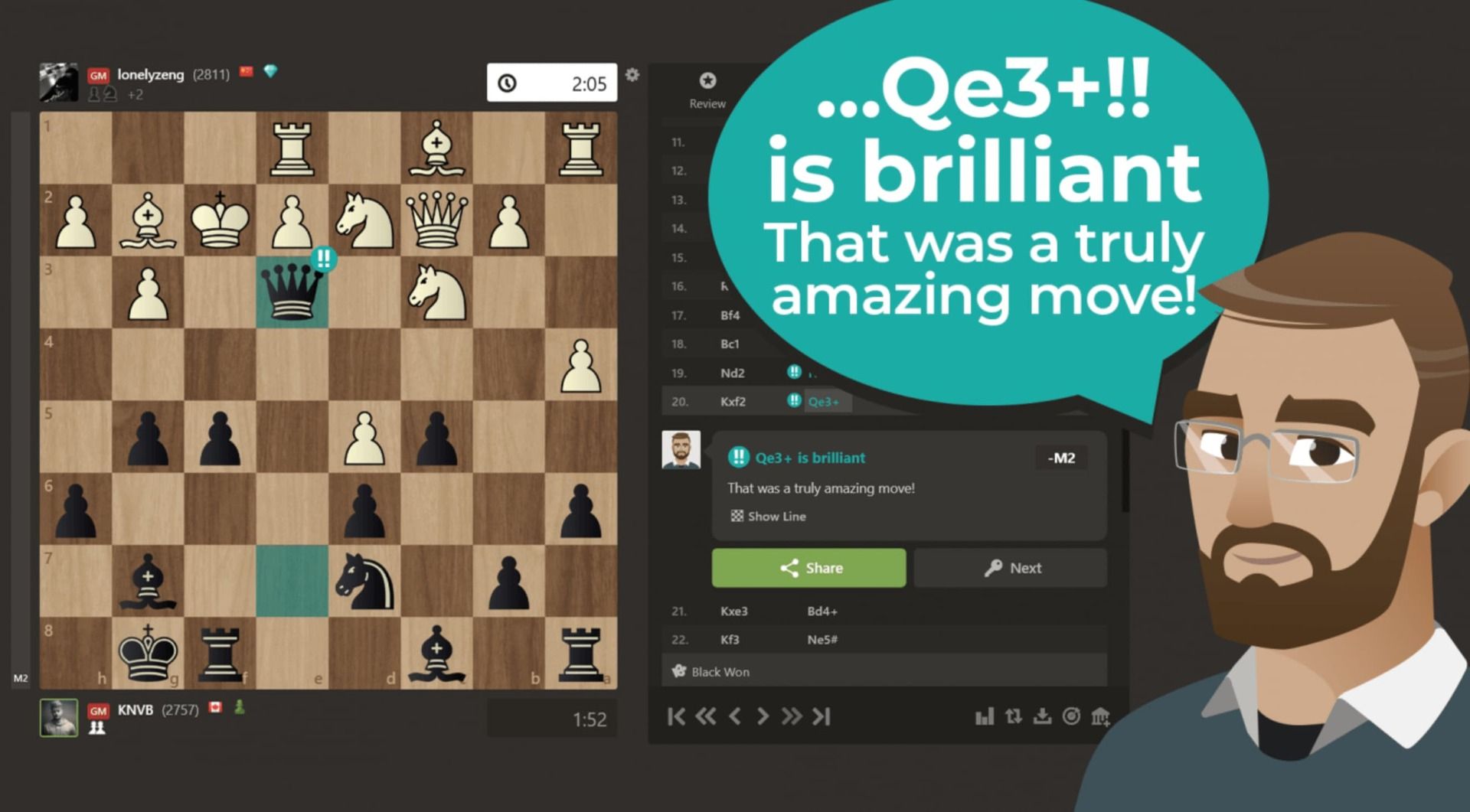
Chess.com Game Review Tool showing a brilliant move analysis
They assumed players would lose a game, open the analysis, identify their blunders, and improve. It was a perfectly rational product strategy.
It was also wrong.
When the team dug into the usage data, they found a massive discrepancy. 80% of Game Reviews happened after wins. Only 20% happened after losses.
Most players ignored the analysis tool when they needed it most. They only opened it when they felt good.
The "learning fallacy" in product design
The product team designed it as a correction tool. When a player reviewed a loss, the interface immediately highlighted their worst moves. The virtual coach pointed out the blunder that cost them the game.
The data revealed the cost of this feedback. User retention dropped 10% after a loss compared to a win.
For a product with millions of daily active users, a 10% drop is a leak you cannot ignore.
Loss aversion is a retention killer
The drop in retention wasn't a feature problem. It was a motivation problem.
75% of new Chess.com users identify as beginners. Less than one-third of them win their first game. They lose often.
Losing already hurts. When the product immediately highlights why they lost, it amplifies the pain. Humans feel the pain of a loss twice as intensely as the pleasure of a gain.
Chess.com was inadvertently punishing users for trying to learn. The UI validated the user's insecurity by confirming they played poorly.
Designing for dopamine instead of discipline
Dylan, the product manager on learning features, proposed an experiment.
If users avoided the pain of mistakes, the product needed to hide the pain.
They redesigned the post-loss experience. Instead of leading with blunders, the Game Review emphasized "Brilliant Moves." Even in a lost game, the engine found the few moves the player got right.
The virtual coach's copy shifted from analytical to encouraging. It told users that losing was part of learning.
The core analysis remained available. But the sequence changed. Validation came first. Correction came second.
The 20% subscription lift from one UI tweak
The impact was immediate.
Game Review engagement increased 25%.
New subscriptions increased 20%.
Retention metrics stabilized.
Players started using the tool they previously avoided. The feature hadn't changed. The framing had.
This success triggered a company-wide audit. The puzzles team adjusted success ratings to be less punitive. Designers changed button colors. Copywriters scrubbed discouraging phrases from the UI.
The Goldilocks Rule of user retention
This mirrors the Goldilocks Rule found in gaming and education. Humans need to feel a sense of competence to stay motivated.
If a product destroys that sense of competence too early, the user churns.
Duolingo understands this. They celebrate the "Streak" rather than accuracy in the early stages. Strava highlights your "Personal Record" segments even on a slow run.
Chess.com proved you can teach users without discouraging them. You just have to tell them what they did right before you tell them what they did wrong.
Source: Albert Cheng
Top Tweets of the day
1/
Always manufacture your comments on ads. Nobody thinks they are AI, for now at least.
The platforms want you to do this. There is a reason they allow you to block or hide keywords in comments of ads.
Perception is everything. So if someone calls you a scam and you don't defend it, people will start thinking you're a scammer. Associations in branding are powerful. This is why "all billionaires are bad" trend picked up. Nobody defended it.
2/
Now do this for an actual SEO & AEO agency and print.
3/
This is one of the reasons why big tech companies hire from prestigious universities.
They have showed that they have the work ethic to get to the prestigious university so they are at least more disciplined than others.
It is extremely hard to change human behavior drastically. You can rather put less effort and get the cream of the crop like how Zuck poached AI researchers from top LLM firms for 100s of millions of dollars.
Rabbit Holes
What’d ya think of today’s newsletter? Hit ‘reply’ and let me know.
Do me a favor and share it in your company's Slack #marketing channel.
First time? Subscribe.
Follow me on X.
More Startup Spells 🪄
Ahrefs' alternative to the boring Chrome Extension Uninstall Survey (LINK)
Influencer Collaboration Strategy That Built Unsplash Collections (LINK)
How SEO Roast turns free tools into $5,250 audits (LINK)
Kalshi influencer marketing: $1,000/month for 12 quote-tweets on X (LINK)
Pizza Hut guerrilla marketing: PR on a $500 budget (LINK)
Reply